
As a makeup artist I use skin care as preparation for a makeup look on my actors, models and clients.
I do have my go-to skin care products that I know work on camera and don’t create any unwanted effects under lighting.
If I am working as a personal makeup artist or doing main cast then I will speak with the actress/actor or celebrity to ascertain what their favourite products are, whether they have any allergies or preferences and I have time to get these ready for the camera tests. Very often the designer will have spoken to them/their team already to ascertain this and design the look.
However there isn’t always enough time for this – working in a film or TV crowd room, for instance, the supporting artists come in without us having seen them before and we have a short time to apply the look.
In this situation the SA (supporting artist) will usually have been fitted for the look beforehand but not always.
Below are some of my go-to moisturisers that I use regularly, particularly if I haven’t had a chance to know and artist or supporting artist’s regular routine.

BALMONDS Daily Moisturiser – this moisturiser is gentle, vegan, contains no harmful ingredients and a good choice for anyone with eczema or sensitive skin. I have used this on every skin type and under numerous types of bases and it gives a great result.
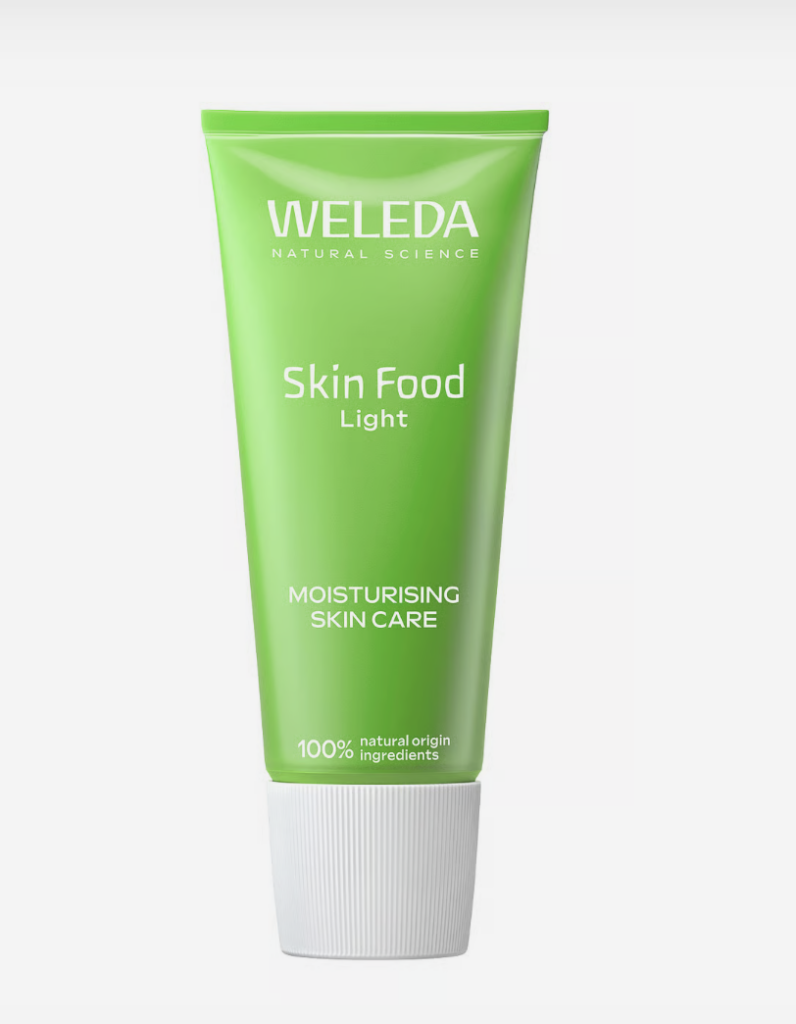
WELEDA – Weleda Skin Food is a makeup staple for many makeup artists – the Skin Food is a very rich cream for dry skin that I use as a hand/body cream mainly – my favourite though is the Skin Food Light – a much lighter texture and great for hands and body and well as the face.
TIP:
A note if you are doing a makeup for camera – either on yourself or if you are a makeup professional – many moisturisers, primers, foundations and even powder contain light reflective ingredients – this is a move by the brands to adapt to the current trend for glowy, glassy skin.
However – on camera this can (and often does) read as sweat, ultra shiny and on black and white high key photography looks like white patches on the skin.
What looks OK to the eye in the makeup room can look very different under strong lights!
A Little Bit of History
If we look back at history the trend for this glossy look didn’t appear until the mid/late 60s when products started to appear to give a frosted glowy blush look to the skin. Nothing could be further from what the women of the ‘20s, ‘30s,40s and ‘50s wanted – where a matte, powdered, flawless look was strived for. Products and advertisements from that time extol the virtues of powder, pressed onto the skin and pancake applied with a moist sponge and drying to give a flawless look that lasted all day. The matte look and glossy look have come in and out of fashion ever since and products have evolved to create luminous skin.
Image :Sheraton Grand hotel powder room Photo: Louise Young 2026
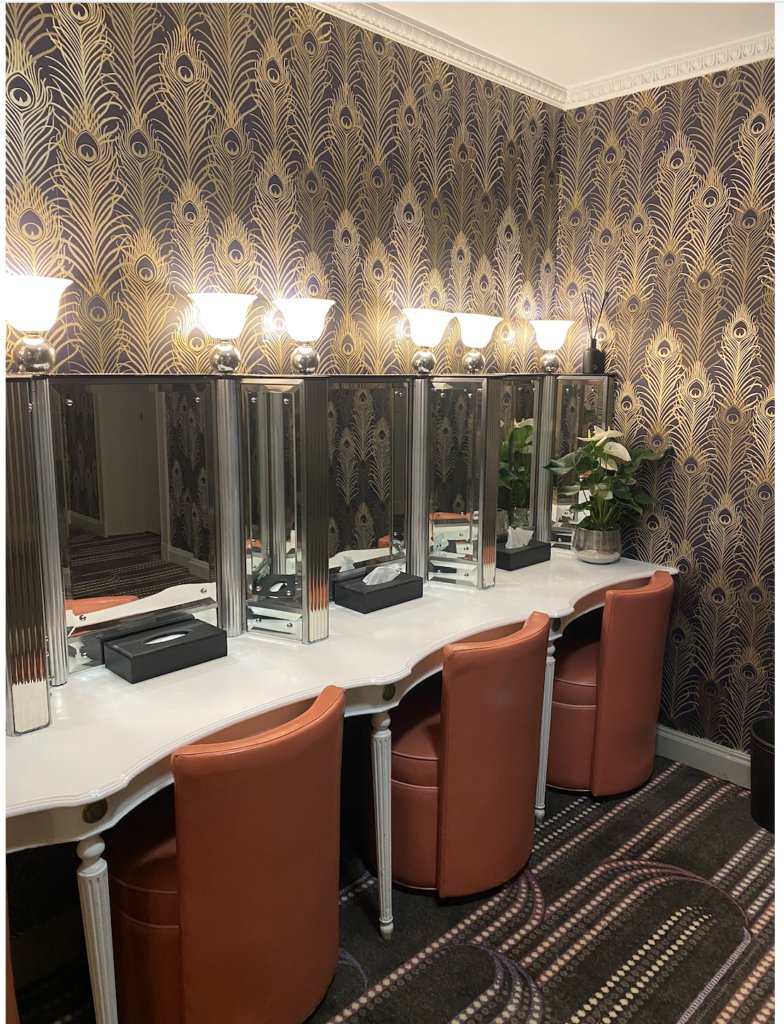
Ladies Powder Rooms were a fixture in every up-market department store and hotel and restaurant. Originally dating from the 17th and 18th century when women and men wore powdered wigs, the powder closet was a room for guests to touch up their powdered wigs in that time. In the 20th century it became a refuge for women to relax and touch up their makeup and a polite term for toilets/restrooms.. A thing of the past now apart from in a few hotels that have preserved these havens from the past.